
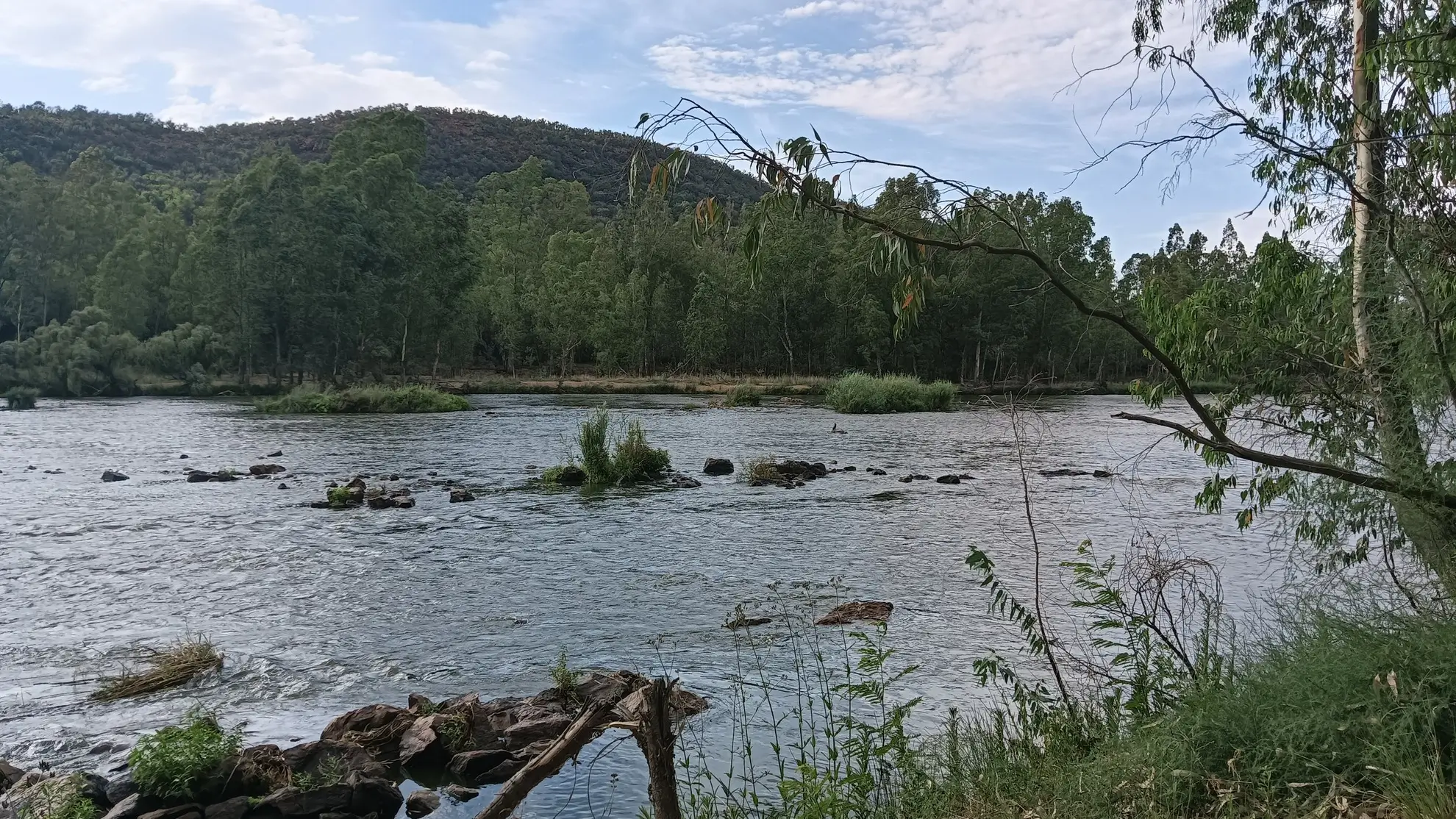
How to catch Yellowfish
on the Vaal River.
The Yellowfish season is starting and guided dates are open. Use these proven guide tactics for Smallmouth Yellowfish (Labeobarbus aeneus): when to fish Euro vs indicator, dry-dropper edges, leader recipes, and tungsten bead sizes that keep your flies in the eating lane.
Main season: Sep–Apr, conditions permitting. The season is now getting underway. Start bead size: 2.8–3.0mm for most Vaal River runs. Euro nymphing wins in pockets and tight lanes, indicator rigs win in broad runs, and dry-dropper works on edges and foam lines when conditions suit.
- Depth first: then size, colour and speed
- Euro: anchor + tag, 40–60cm spacing
- Indicator: set depth ±1.5–2× water depth
Micro rule: change one thing at a time — depth → size → colour → speed. Start with a middle bead, read the drift, then adjust weight before you start swapping flies every five minutes like a man possessed.
2.8–3.0mm for most runs. Go heavier in pushy or coloured lanes.
Pocket water and tight seams. Two-fly anchor + tag, 40–60cm spacing.
Broad runs, wind and long drifts. Set depth ±1.5–2× water depth.
Bank edges, foam lines and clearing water after summer storms.
Learn when to use each tactic on real Vaal water.
This guide explains Euro, indicator and dry-dropper systems. With the new season underway, a guided day helps you choose the right method for the actual lane, flow and fish behaviour in front of you. Shayne guides a maximum of two anglers for focused, practical coaching. You can compare the Vaal River fly fishing guide rates before requesting a date.
Full payment is requested only after your preferred date, availability, public flow information and the safest practical river plan are confirmed.
Euro Nymphing
Best in pocket water and tighter lanes. Use slim, fast-sinking flies and adjust bead mass for depth and speed.
Core Setup
- 10–11’ rod, 3–4wt, level mono or mono-core leader
- Two-fly rig: heavier anchor + lighter tag, 40–60cm apart
- Contact drift: lead with the rod tip and keep slack minimal
- Hi-viz sighter for strike detection
Go-To Flies
- Perdigon #14–18 with 2.0–3.5mm tungsten
- PTN Hotspot #14–18 with 2.5–3.0mm bead
- Caddis larva #14–16 as anchor when pushing
- Mayfly micros: Hare’s Ear and PTN variants
Guide tip: ticking too much = go lighter or lift the rod; never ticking = heavier bead or slightly longer tippet.
Deep Dive: Euro Nymphing →Indicator Nymphing
Great for wider runs, chop and longer drifts where tight-line reach is limited.
Rig Notes
- 9–12 ft leader plus 4X–5X fluoro tippet
- Small yarn or air-lock indicator
- Set depth ±1.5–2× the water depth
- Mend early, then leave it to avoid micro-pulls
Flies That Produce
- Perdigons and PTN Hotspot #16–18
- Worms when the river is coloured and pushing
- CDC emerger as a dropper in clear slicks
Guide tip: aim for an occasional bottom “tick” every few metres — more than that usually means too deep or too heavy.
The best method is the one that matches the water in front of you.
On a guided day, Shayne helps you choose between Euro, indicator and dry-dropper based on lane width, depth, speed, wind and fish position. The goal is a repeatable decision system, not blindly sticking to one rig.
Maximum two anglers. Full payment only after the date, public flow information and the safest practical river plan are confirmed.
Dry-Dropper
Edges, grassy banks and foam lines shine, especially between summer storms as the water starts to clear.
How to Rig
- Buoyant dry such as foam beetle or ant plus 40–60cm dropper
- Keep casts short and dead-drift with minimal drag
- Target shade pockets, seams and undercuts
Go-To Patterns
- Foam beetle or ant #10–14
- Dropper: slim #16–18 nymph, Perdigon or PTN
- Soft hackles when fish chase emergers
Guide tip: if the dry “twitches” but doesn’t sink, pause — many Yellowfish sip subtly.
Leader Recipes & Bead Weights
Euro Leader
- 10–20ft level mono, 10–12 lb
- 40–60cm hi-viz sighter
- 100–120cm 4X–5X tippet for two-fly rigs
Indicator Leader
- 9–12ft tapered or straight leader
- Indicator at ±1.5–2× depth
- 4X–5X tippet to flies
Bead Guide
- 2.0–2.5mm: skinny seams and shallow water
- 2.8–3.0mm: standard runs, start here
- 3.2–3.5mm: fast/deep lanes or coloured flows
Rule of thumb: start medium, 2.8–3.0mm, and adjust one variable at a time — depth, size, colour, then speed.
Seasonal Adjustments
Sep–Dec
Between storms: peak action. Heavier beads in colour; dry-dropper on edges as it clears.
Jan–Feb
Early and late windows. Ants and beetles on top; short-line Euro in pocket water.
Mar–Apr
Cooling and clearer. Slim naturals, lighter beads, longer leaders and more subtlety.
Bring your current setup. Leave with a clearer system.
Learn how to select the method, adjust bead weight, control the drift and move between water types without guessing. Guided bookings for the new Yellowfish season are now open.
Full payment is requested only after availability, public flow information and the latest field observations are considered for the river plan.
Yellowfish tactics questions.
Straight answers about tippet, indicators, dry-dropper signs and starter bead sizes for the Vaal River.